
Hello gorgeous friends and welcome to my fifty ninth blog.
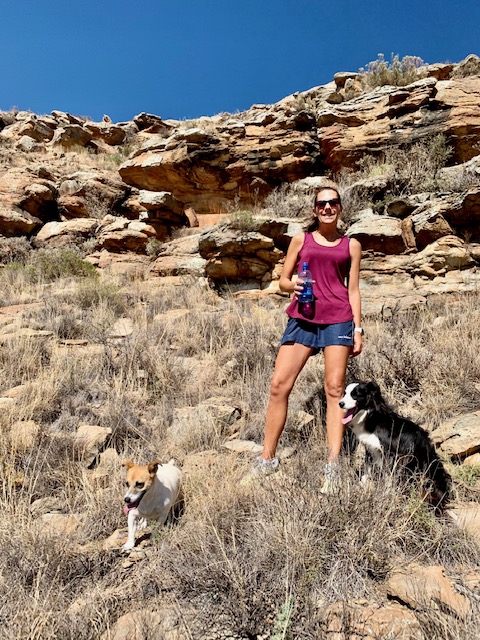
We have just returned from a magnificent long weekend away. We were blessed to be able to bask in the glories of nature whilst moving. We hiked in a fynbos forest, walked on an unspoilt and protected beach and climbed part of a beautiful scenic trail. On two of these we caught up with very dear friends and it was all so good on so many levels.
On our return home I started reflecting, and this got me to thinking about the importance of natural movement and moving in nature. I realize that I have spoken about movement a great deal and often in previous blogs, but I decided to look at this a little differently.
Natural movements include walking, running, climbing, or crawling as well as manipulative movements such as lifting, carrying, throwing, and catching. Most of these natural movements incorporate multiple elements of fitness.
If we observe how very young children move, we can start exploring this concept of natural movement. Babies, toddlers, and preschoolers play and pick up things in a deep squat position. They get up from the floor without using their hands and they can easily shift their body weight and change positions while they are on the floor to reach a toy or a book. This movement is all done naturally. If we try doing this, most of us will struggle. Yet this is the simplest way of maintaining strength and flexibility and mobility.
An officer in the French Navy, George Hébert (1875-1957) experienced first-hand the value of physical and mental strength when he helped to rescue 700 people from a volcanic eruption whilst stationed on the island of Martinique. The experience left him with a profound belief that athletic skill must be combined with energy, courage, and a sense of altruism. He had travelled the world and admired the flexibility, skill and endurance of indigenous people who had received no formal physical training but simply lived closer to nature.
On his return to France, he began teaching “la méthode naturelle” – a method that relied on natural agility and courage instead of formal gym training and competitive sports. He designed his sessions to include essential human movements such as walking, climbing, and jumping to name but a few. Due to the recent trend of outdoor fitness, the public’s attention to this method is on the rise. There are also warrior workouts and bootcamps which are also quite similar and very popular.
The skills and competencies that humans have mean that they are inherently capable of hunting, foraging, climbing and other skills essential for our survival. Back in the day, when we were cavemen, and we hunted animals, foraged for our berries and nuts and fruit, climbed trees for food or to get away from the wild animals, ran and swam across a raging river to escape the lions. We as humans have got it pretty darn good these days. Most of us do not need to hunt, gather, farm, or scavenge for our food. Clean water and medical care are widely available. Even very poor folk have a higher quality of life that many have experienced throughout history.
However, the modern conveniences we enjoy have consequences, including the gradual decline of Natural Movement.
Below are some examples of this.
- Barefoot walking
Walking barefoot has been stigmatized and considered weird, gross, or even dangerous. While I believe there is absolutely a time and place for wearing shoes, going barefoot should be our default behaviour when it is safe and acceptable to do so. In theory walking barefoot should restore our natural walking pattern Start slowly if this is new to you, on soft grass, or on the beach. Then try on harder thicker sand or perhaps even rocks. This will strengthen the deep musculature in your foot, improve your proprioception, balance and body awareness, improve the control of your foot position when it strikes the ground and help with your sense of wellbeing. This is also soul food.
- Sitting without a chair
We are surrounded by chairs and sit in the same position for hours on end and this is not helpful. Remember the sitting syndrome blog. Floor sitting is the alternative and is an easy one to integrate into a natural movement practice. This encourages natural stability, decreases hip tension, increases flexibility and mobility and encourages more muscle activity. Sit cross legged, or with one leg out and the other bent outward, long sitting, squatting or side sitting. Be careful if you have hip or knee joint problems or back issues. i do struggle with this due to the decreased flexibility throughout my body.
- Hanging and climbing
We really are meant to hang and climb. Its not just for monkeys and baboons. So few folk do this nowadays, even kids do not do this much anymore. Hanging helps our shoulder stability and strength, improves our grip strength, and increases our ability to transfer forces through our body. There are rock climbers and those who love pull ups but overall, we are getting weaker in this department. Learn how to hang carefully and safely, stabilizing your shoulders slowly in a variety of positions below the bar before you move above it. Climbing is also so good for you. It uses many muscle groups throughout the body, improves stamina and endurance, flexibility, and agility. I am not a mountain goat and find climbing quite scary and do very little of it.. Perhaps this should be my next challenge.
- Crawling and other ground movement
As babies we spend a lot of time doing this and learning to get up and down from the floor in numerous ways. This is a basic biological process that comes naturally to us and it is instinctive. However, we stop this, mostly, when we grow up and this is just wrong. Ground movements are practical for many activities in daily life. Getting up from the floor provides mobility, stability, and strength benefits Crawling can strengthen muscles and help realign our bodies. So, start today, crawl for a while, try leopard crawling or bear crawling, then sit on the ground and then practice getting up, often, and in different ways.
- Balancing
My new hobbyhorse! Balance is a fundamental aspect of any movement we perform. Good balance improves your posture and coordination and may increase your total body strength. I see many older folks after they have fallen and fractured a femur or a hip or a shoulder and this is so often due to decreased balance reactions. I believe so many falls could be prevented with instruction and balance exercise. So, the next time you are making a cuppa, balance on one leg, that is a great start, and you can progress from there. Let me know if you would like some help with this.
- Carrying (not just bags and phones)
Sure, we carry our cell phone, coffee mug and bags but when do we have to carry something heavy or for long distances? The last time I did this was after a particularly successful retail therapy shop whilst on holiday abroad Those were the days, my friend! We use carts, luggage with wheels and all sorts of other things instead of carrying stuff.. We are robbed of the skill, fitness and capability that comes from this natural movement. Start this gradually and with proper technique, proper body positioning, breathing and the balance between tension and relaxation. Perhaps do this in the safety of your home and not at the piggy back race at your child’s school or after a few beverages.
- Throwing and catching
Humans are uniquely built to throw objects with both power and accuracy, but outside of sports most people only throw their car keys ( mostly at their partner). Throwing and catching improves core strength, hip and shoulder stability and power generation and absorption. To get started, find a safe place to practice with an object you are comfortable with, a medicine ball for example or find a friend and do this together. Perhaps don’t attempt the Patrick Swayze famous catch and lift of Jennifer grey in Dirty Dancing until you are totally proficient in the catching department.
- Jumping and landing
Kids do this all the time, but in fact the ability to absorb impact (no matter how big or small) effectively and efficiently is a very important skill in life. Most of us can jump, but very few of us can land efficiently, without proper training safety, with stability and proper alignment. Learning this skill will decrease risk of injury and prolong the life of your joints So start jumping, gently at first, and you will see how addictive and fun it is. Just remember to focus on proper landing mechanics. I think I may need to start doing this once we get going to dancing parties like we did back in the day.
- Swimming
I love swimming and this used to be my favourite sport. I have now got lazy and that is not good. Learn to swim properly if you cannot. It keeps your heart rate up but takes some of the impact stress off your body, builds endurance, muscle strength and tone and cardiovascular fitness. It helps maintain a healthy heart and lungs Get swimming again if you are able in a safe and secure environment. Swim in gentle rivers, lakes or the sea for awesome health and wellness benefits.
- Moving in nature
Nature is our greatest teacher and there is no substitute for it. Studies have repeatedly shown that we need nature to thrive physiologically and psychologically. Nature offers so much more than any man-made environment can. Run or jog or walk in a forest or on the beach or round a park. Dance in the rain. This may help improve your immune function and lower your stress, it can be such fun and you can get a gentle dose of vitamin D.
With thanks to Bradley W. Prigge and the Movnat journal for some interesting thoughts and ideas.
Wishing you all a weekend filled with loads of natural movement.