
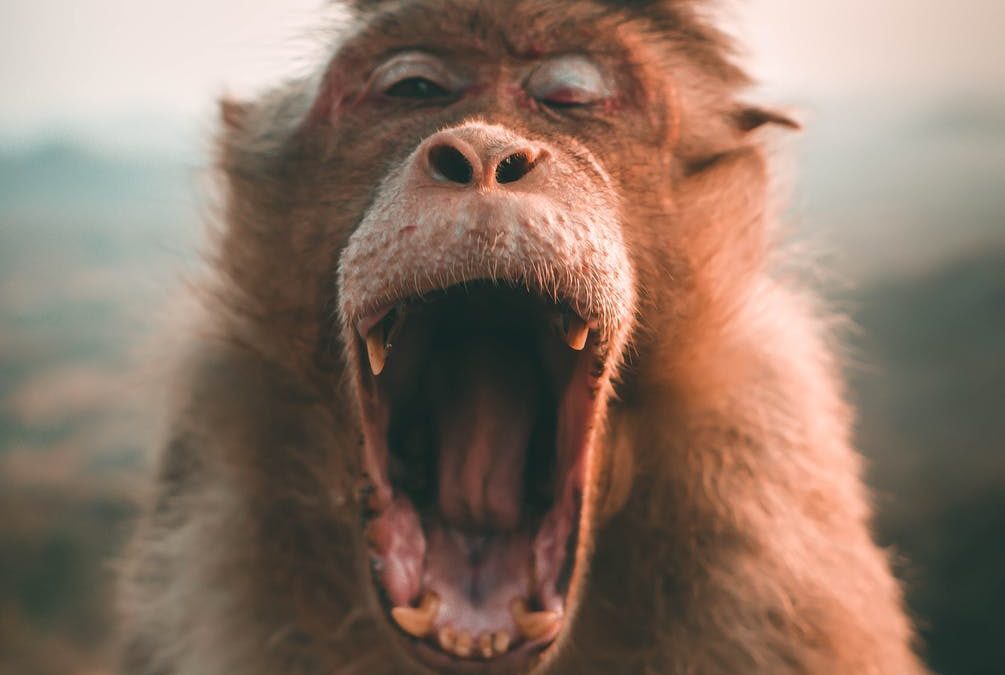
Good morning friends and welcome to my sixty seventh blog.
I am just imagining what you all are thinking. What on earth is she writing a blog about yawning and how on earth can it help our health? She has finally and irrevocably lost it. We knew it was coming. Alas and lamentably, what are we to do?
However, this is not necessarily the case, although the jury is still out on this one. Fear not, bear with me for a moment, and read on a little further.
As I am sure toy all know yawning is one of those very natural reflexes performed by humans, mammals, birds, and reptiles. Yawning is clearly associated with sleepiness and boredom but there is so much more to this whole yawning yarn than meets the eye!
Yawning is characterised by an opening up of the mouth, which is accompanied by a long inspiration, with a brief interruption of breathing and then followed by a short expiration.
We all know that yawning is very contagious. Once one person starts yawning, invariably another starts, and then another, until often the whole group is yawning. Maybe one reason yawning seems contagious is that one feels that seeing someone else yawning gives us the permission to do this. If you are yawning, then it’s okay for me to yawn too, and this is good because I really feel the need to.
However, conversely we have been taught from a very young age that to yawn in public is rude and discourteous, in fact even insulting or offensive and for this reason most of us do stop ourselves from doing this very instinctive thing. Open mouths and human noises are deemed unacceptable in polite company. As is passing wind. Oh dear, one of my vices, but a subject for another day.
If someone starts yawning, the perception is that they are bored and not really interested in what is happening or being said and often that does not go down a treat. I have memories of blocking heaps of yawns throughout my life, during a tedious class at school, a monotonous lecture at varsity and then those long post-grad physio courses, particularly those presentations after a heavy lunch when all you feel like doing is lying down on your bed and having an afternoon nap.
Did you know that yawning is just like any other natural urge or reflex? The other reflexes are eating, sleeping, or going to the toilet. However, it is also so different. Most of us do not wait until we are literally starving before we eat something. Also, we do not wait until we are beyond exhausted and falling off our feet until we take a rest. We also do not bide our time when we are desperate to go to the loo, risking an untimely and super embarrassing accident. We do these all these things on purpose and on a regular basis, often even before we really must or need to. These are habits, actions taken subconsciously, and often based on rituals. However, when it comes to this yawning business we tend to suppress this reflex.
Most of us only yawn when and if our body demands it or forces us to do this. Again, we often stop this, partially or completely. If we delve into this a little deeper, not allowing ourselves to experience a full-body yawn, may indicate that we are forbidding ourselves to be true to ourselves in other areas of our lives. Do our concerns about what other people think or say, or how they will react, stop us from listening to our body, our heart, and our mind? How many ways may we be inhibiting our own natural energies, creativity, love, truth, and spirit? Food for thought.
So, if we look at a wee bit of neuroscience (I just cannot help myself) we see that yawning is a powerful neural enhancing tool. This means it helps to boost the cognitive abilities of our brain. Yawning is associated with the precuneus, a tiny structure hidden within the folds of the parietal lobe, the lobe that sits near the upper back part of the skull behind the frontal lobe. This precuneus appears to play a central role in consciousness, self-reflection, and memory retrieval So, the more we yawn, whether it be unconscious or deliberate, the stronger this part of our brain will become.
So, what are the benefits of yawning?
- Yawning balances the nervous system, releases toxins and helps integrate, process, and shift our energy, thus enhancing our energy. It may be nature’s way of connecting us with our body and mind and feelings.
- With a yawn comes the natural urge to stretch and breathe and to make sounds and this is a beautiful moment of health, pleasure, and vitality.
- Yawning stimulates a unique neural response in the part of the brain associated with empathy, bonding, play and creativity.
- When we yawn, we clear and release subtle energy blocks in our system, allowing us to feel more fully and deeply what is happening and what is being experienced. It allows us to be totally present.
- Yawning increases when we are tired, and it may be one way our body tells us to rest. On the other end of the spectrum, exposure to light also makes us yawn, which means it is part of the process of waking up.
- It relaxes us, but also brings on a state of increased cognitive awareness, making us more alert, introspective, and self-aware.
- Yawning is also part of the parasympathetic response, the rest and digest mode, and plays a part in regulating our temperature and metabolism.
- Learning to breathe and relax through a yawn helps us to chill our emotions. This enables us to channel energy in a more conscious, healthy, and creative way.
- Yawning will open and expand our breathing capacity. Breathwork is my new passion, so I just love this.
- We can use yawning to ward off the effects of jet lag and to ease the uncomfortable effects of high altitude.
- Dopamine is involved in yawning which then activates oxytocin, the neurotransmitter that regulates sensuality and pleasure as well as bonding in relationships, (we have spoken about this hormone plentifully which means yawning can enhance intimacy. There are other hormones involve with yawning such as serotonin, sex hormones and nitric oxide.
- Yawning may also cool off the brain which helps it to reach optimal homeostasis in our quest to maintain optimal internal stability.
- It has been said that neuroscientists can find no other single activity that has so many benefits and influences so many brain functions at once.
- Yawning may help us to open to our emotions more fully, to honour and embrace them.
How cool is the fact that the simple and mostly involuntary process of opening our mouth and breathing in deeply and filling our lungs with air can have so many benefits!!
So, the bottom line of all this is, guys do not wait until your body demands yawning. Start yawning now. Create daily yawning rituals. Yawn on purpose and deliberately. Do it often. Do it regularly. Yawn with your whole body. Stretch while you yawn. Make it your thing and do not stress about it being impudent to do this. Let us start a yawning revolution and make this positive and enriching. Go out and spread the word. Tell folk that you are doing this to enhance your health and wellness and refer them to this blog or to the awesome work of Dan Brule, from whom so many of my thoughts and ideas on yawning have come.
Stretch while you yawn. Make a pleasant, soothing sound when you yawn. Yawn til your eyes water. Yawn during tests, tasks, activities interactions, performances, and presentations. Yawn when you feel anxious, angry, afraid, tired or wired.
So, what are you waiting for? Go out there and get yawning!
Wishing you all a fantastic and fun weekend!